How to Cut Paving Slabs
Cutting paving slabs is a straightforward job when you have the right tools and know what you’re doing. By following this comprehensive guide by Minster


Once you’ve created a beautiful patio or driveway, it’s important to protect your investment, keeping it looking pristine for years to come. There are several ways in which you can do this, but one of the most widely used and simple methods is to seal the paving slabs.
If this is your first time sealing a patio or driveway, don’t worry – you’re in the right place. This guide will explain the step-by-step process, as well as provide you with some top tips for maintaining your sealed patio or driveway!

Before we get into how to seal your patio, let’s quickly look at the many benefits there are to sealing your patio or driveway:
Alongside an added layer of protection, sealants can also give your slabs a different look or finish, which can look great for many different types of paving. However, we understand that not everyone wants this. Fortunately, sealants usually come in two types, so there’s an option for both preferences:
Once you’ve chosen your type of sealant, you’re ready to start sealing your patio or driveway! The process is easy and usually involves 5 simple steps – let’s take a look at what these are…

Before starting, make sure the forecast is dry and within a comfortable temperature range (between 5°C and 20°C) for at least 24 to 48 hours. If rain is due soon, it is recommended that you hold off for a few days, as the wet conditions will affect the drying stage. Most sealants can only be applied to dry surfaces, so you’ll need to choose a time when it hasn’t rained for the previous 2-3 days, too.
Note: You should wait between 30 to 60 days after your slabs have been laid before sealing them. This timeframe allows for efflorescence to surface and be washed off before sealing, preventing it from being trapped under the sealant, which can cause unsightly stains.

Sealant needs to be applied to a surface which is clean as well as dry. You should thoroughly remove any weeds, dirt, and stains by sweeping and washing the surface using a pressure washer; keep this on a lower setting to prevent damage to softer material, such as sandstone paving, and avoid aiming it directly at the grout between slabs.
If you’re working with older paving, you should check that there are no cracked tiles or loose pointing, as this can affect the success of your sealant. If you’ve noticed signs of damage, promptly repair or replace these slabs first before you proceed.
If you’re unsure of the best way to clean your patio, you can check out our guide here.
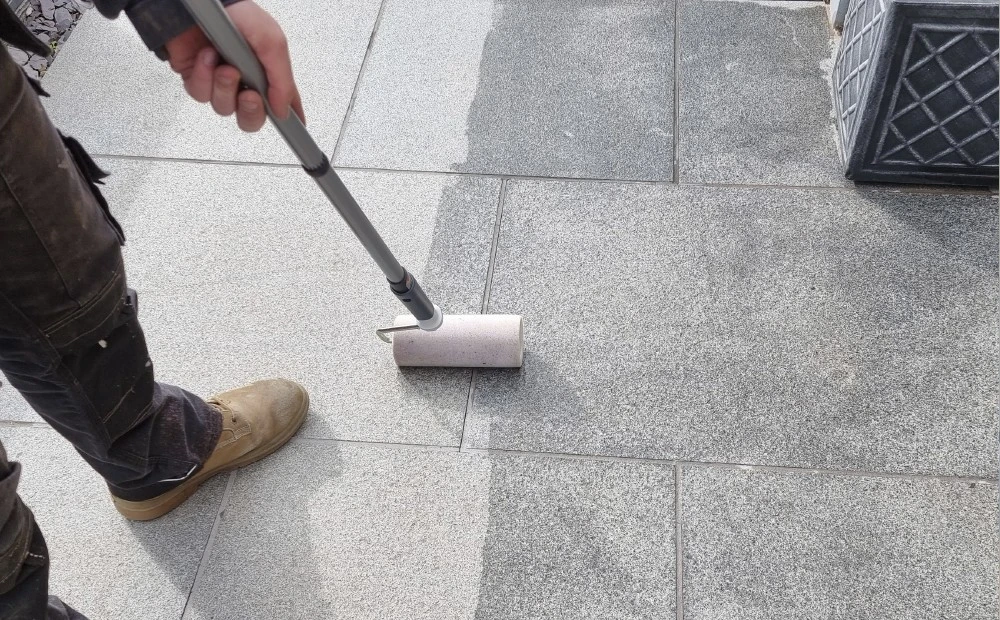
Once the cleaned slabs are completely dry, it’s time to get started! Ensure you’re wearing the necessary protective gear, and check your sealant’s label before you begin; although most are solvent-free and water-based, it is best to be cautious. You should also keep young children and pets clear of the working area.
Using either a low-pressure sprayer, a long-handed paint roller, or a strong, natural fibre brush, apply the sealant to a small test area to ensure it is suitable for your paving. We recommend leaving this for a few hours and checking that everything looks okay, such as the colour and finish of the slabs.
If you’re happy with how the test patch looks, begin with the first coat. Roll or brush the sealant onto each slab, ensuring the surface of each slab is evenly saturated.
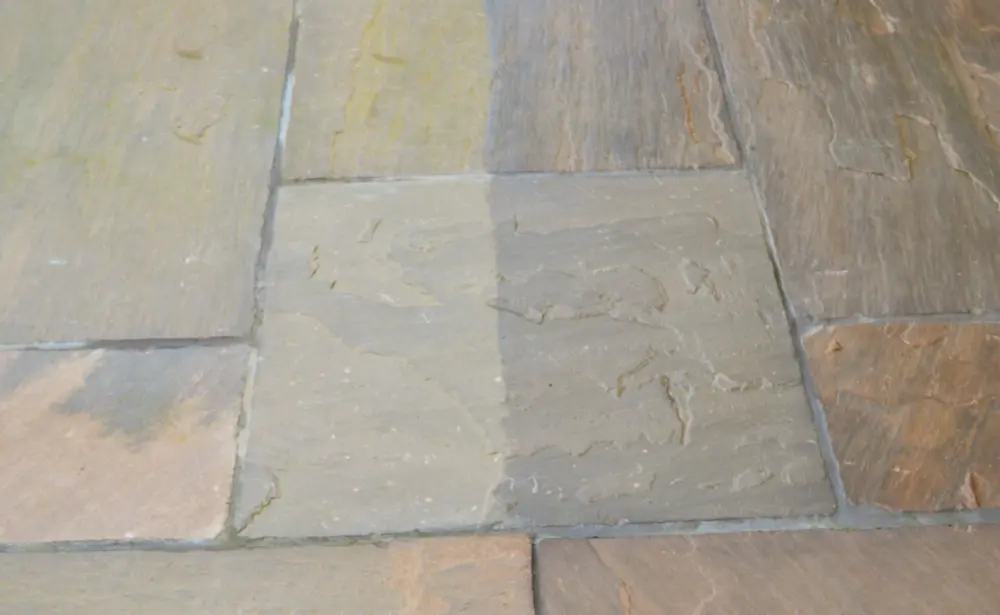
If you’re using an invisible sealant, you can ignore this step – one coat will suffice, especially for surfaces with low porosity, like granite. However, for colour-enhancing sealers, two coats will create a gloss finish on the slab’s surface, whilst three coats will form a persistent “wet look”.
When applying multiple coats, you should wait for the previous coat to start to dry before applying the new layer. In most cases, this should take around an hour. Don’t let the surface completely dry, or the sealant will fail to impregnate the slabs. For each coat, halve the amount of sealant used in the previous coat.

Let the final coat dry completely, following the manufacturer’s recommended drying time. This will typically take at least 2 to 3 hours, but in an ideal world, it should be left even longer before you walk on the surface. If you’ve sealed driveway paving, you should wait a minimum of 48 to 72 hours before driving on it.
You should top up your paving with a new coat of sealant every few years, using the same product to get the same results. When the time comes to reapply, follow the same steps as above, but this time stick to just one coat, regardless of the type of sealant you use. This will help your patio or driveway look as good as new for years to come.
Generally speaking, porcelain tiles do not need sealing as they are very low-porosity. These tiles are fired at high temperatures to make them water-resistant and naturally robust. However, polished porcelain patios will still require sealing to stop water ingress from affecting your slabs.
The best sealant for your patio will depend on the type of paving that you’re using and the finish you desire. Let’s take a look at some of the best products for different types of paving:
For those who want to protect slabs but with virtually no change to their appearance, we’d recommend Ultimate Sealer by ECOPROTEC. This water-based, environmentally-friendly solution helps to reduce efflorescence and strongly repels dirt, oil, and grease. It’s suitable for a whole range of paving, from natural stone to block paving.
If you need a sealant which provides an enhanced finish to your paving, we’d suggest using ECOPROTEC’s Colour Enhancing Sealer. Suitable for all kinds of paving slabs, the water-based impregnating sealer helps protect against staining, repelling water, grease, and oil to keep your patio or driveway looking pristine.
Some homeowners prefer a “just-washed” look on their paving, which ECOPROTEC’s Porcelain Paving Enhancer can provide. This water-based, self-shine enhancer facilitates maintenance and cleaning, creating a high resistance to wear and stains. Your paving’s appearance will be embellished, giving you a more aesthetically pleasing patio or driveway.
Once you’ve sealed your paving, there are a few best practices to adhere to, helping your investment last longer and keep its attractive appearance:
At Minster Paving, we stock a range of sealants and other landscape accessories to help your garden projects stand the test of time. If you’ve got any questions about the products we sell, please don’t hesitate to contact us, and we’ll be more than happy to help.
Cutting paving slabs is a straightforward job when you have the right tools and know what you’re doing. By following this comprehensive guide by Minster

How Much Fall Should a Patio Have? This is the question that many people ask when they begin to build their first patio. We’ve created


