


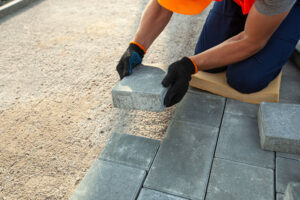
How to Cut Paving Slabs
Cutting paving slabs is a straightforward job when you have the right tools and know what you’re doing. By following this comprehensive guide by Minster

In the UK today, there are 22.7 million households with a private or shared garden. Whether you have a pocket-sized courtyard or a small rear plot, a well-designed garden can make a real difference to both the functionality and look of your garden.
In this guide, we will share practical design ideas for small gardens to help you make the most of your space. We will also look at key factors, including what to do when you’re short on time, working on a low budget or how you can keep a garden looking good all year round without lots of maintenance.
Before you make any purchases or start any landscaping work, it’s key to spend some time planning what you want to do. A small garden, designed and planned with how you want to use it in mind, will always be better than one put together as you go.
Some primary garden functions to consider are:
Factors to consider are:

In a small garden, the plant-to-patio ratio is crucial for balancing greenery with usable space. This is something you need to consider – deciding how much of the garden you want to be paved and how much you want planted.
We recommend that you aim for a 60:40 ratio, with 60% of the space dedicated to plants and 40% to the patio. This balance allows for enough greenery to create a lush atmosphere while providing a sufficient hardscape area for practical use. However, if you require more functional outdoor living space, a 50:50 even split ratio may be more appropriate.

Before including a lawn, decide whether you’ll actually use it. Lawns require regular maintenance, with issues including them quickly becoming worn or prone to muddy areas developing in the winter. This can reduce the ability to integrate garden elements. Without a lawn, you can use the space for a variety of plants, functional structures, seating and dining.
If you like the look of a lawn but don’t have time for regular maintenance, an artificial lawn is worth serious consideration. Alternatively, decorative gravel is a cost-effective way to brighten the space with little to no ongoing upkeep.
If you do decide to use decorative gravel or another garden aggregate like chippings or stone to complement your garden, we have a handy gravel calculator tool here. This will help give you an estimate of how much gravel you will need, as well as the cost.
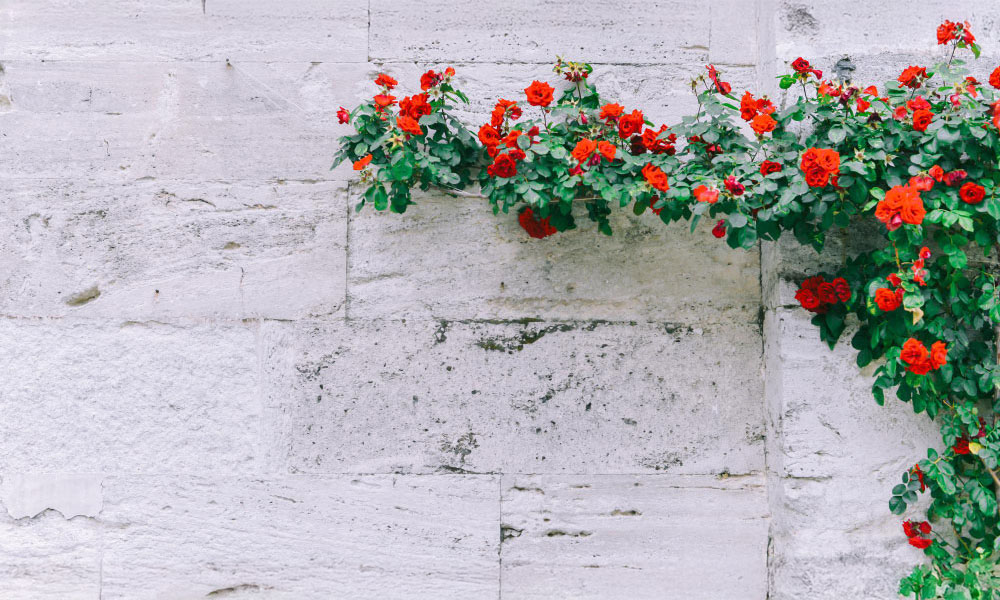
When you are limited on ground space, thinking vertically can become really valuable. Vertical gardening involves using walls, trellises, and other structures to grow plants upwards rather than outwards. This can be achieved with climbing plants like ivy, roses, or wisteria, which all add greenery and flowers without taking up ground space. Wall-mounted planters and hanging baskets are also excellent for growing herbs, flowers, or even small vegetables.
Check how water moves through the garden before finalising your layout. Poor drainage can lead to waterlogging, which can damage plants and lawns, create muddy or slippery surfaces, or, in more serious cases, cause water to move towards a property.
When you are planning your garden, you should check for any areas that consistently hold water, these need to be accounted for in the design and not just paved over. Incorporating drainage channels or permeable paving into your layout would be far more cost-effective than retrofitting drainage solutions afterwards.
Paving should always be installed with a slight gradient to direct surface water away from the house and towards a drain, lawn, or planted area. Your landscaper should factor this into the design and installation from the start.
Small gardens differ based on a series of factors, including their shape and their surroundings, which present unique challenges and opportunities for each space. Here are some common types of small gardens, and how to approach creating each one.
Courtyard gardens often feature a large proportion of paving, and in some cases may be fully paved. This creates an opportunity to create an outdoor room that feels designed and intentional. Wall-mounted planters, container planting, and climbers trained against the walls can introduce greenery without giving up any of the usable floor space.
Atmospheric lighting is worth investing in for a courtyard setting. For example, string lights can transform the space after dark and make it genuinely enjoyable to use in the evenings. A courtyard garden that is well-lit becomes an extension of the home rather than just an outdoor area.
Terraced House gardens are traditionally long, narrow layouts which can feel like a corridor space. Using zoning techniques could help significantly to divide the garden up into different zones. For example, a dining area near the house, a seating or relaxation zone in the middle section, and a planted or productive area at the far end could be one idea for approaching this.
You can use paving to help define these transitions rather than relying solely on planting to keep the design clean and easy to maintain.
A north-facing garden receives less direct sunlight than south or west-facing ones, and that is a key consideration in the design.
When it comes to layout, think carefully about where you position your seating area. Even in a predominantly shaded garden, there may be a spot that catches more light at certain times of day, and that is usually the best place for a patio or chair.
Paving colour is also worth thinking about in a north-facing space. Light-coloured slabs reflect the available light back into the garden, helping the space feel brighter and more welcoming. Darker paving, while stylish in a sun-drenched garden, can make a north-facing plot feel gloomy.
If entertainment is the main purpose, you should support that vision with every decision you make.
Some ideas are:
Do you want a garden you’re proud of but don’t have much time to spend on it? The good news is that by doing the right things, you can create an attractive small garden which requires low maintenance.
One thing to immediately think about is the section on lawns above. If you reduce the lawn size or remove it altogether, that is an effective way to decrease required ongoing maintenance. Alongside that, here are some further low-maintenance ideas that can suit ‘time-poor’ gardeners.
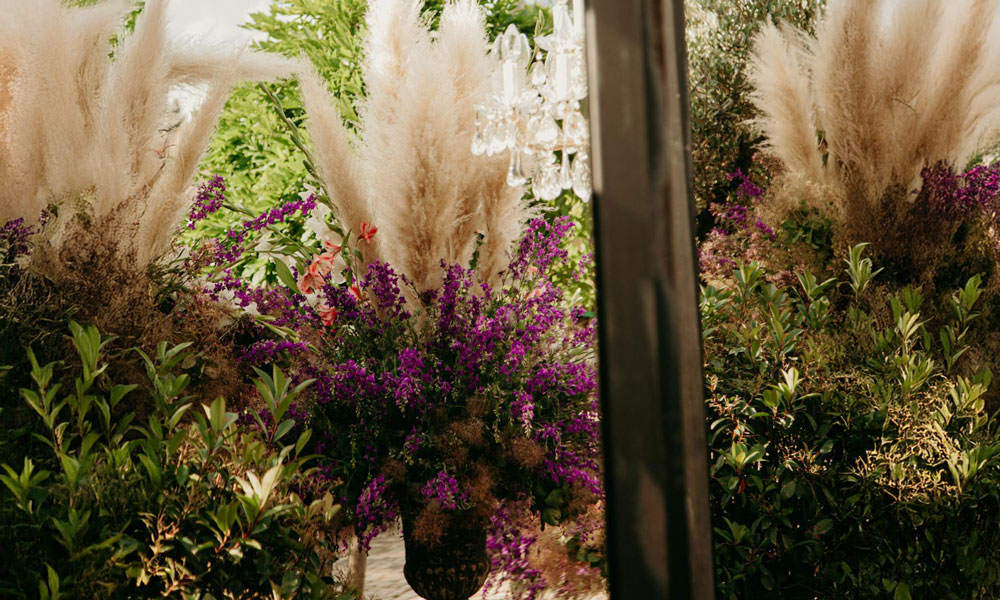
A strategically placed mirror can make a small garden appear both bigger and brighter. When mounted on a garden or wall, a mirror can reflect light and greenery into the garden, creating the illusion of a more expansive area.
You should choose a mirror which is designed specifically for outdoor use, as standard mirrors will deteriorate quickly when exposed to moisture. Importantly, you should make sure to position mirrors to reflect attractive views, enhancing the sense of space and adding a touch of whimsy.
A circular or arch-shaped mirror is a strong idea for a small garden setting.

A water feature can enhance a garden without overwhelming the current space, attracting wildlife such as dragonflies and frogs. Meanwhile, placing a water feature where it can reflect the natural light will have the effect of widening a space.
From a maintenance perspective, self-contained water features are relatively straightforward to look after. They are available in a wide range of sizes and styles, making it easy to find an option that suits both your garden dimensions and your aesthetic.
Transforming a small garden does not need to be expensive. With careful planning and the right material choices, you can create an attractive, well-designed space on a modest budget.
Some initial ways to keep costs down are:
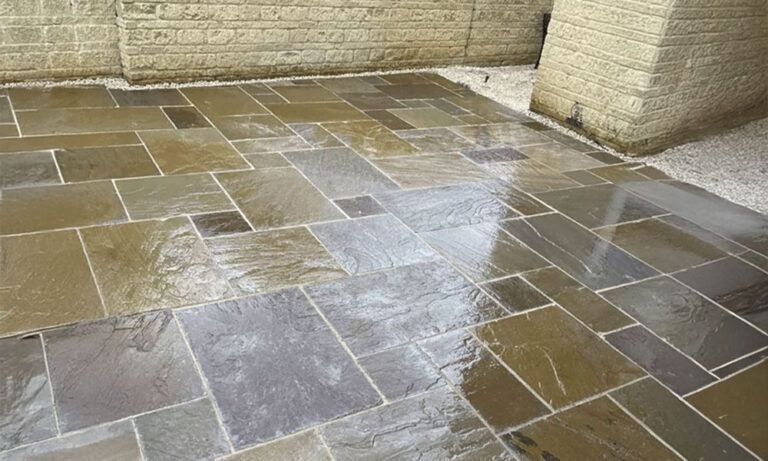
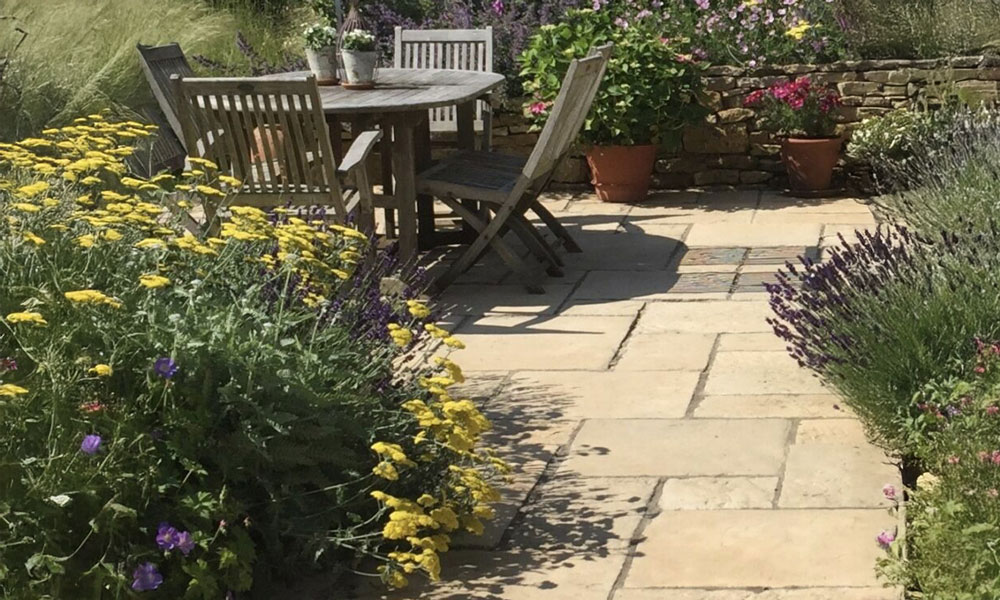
Indian sandstone is one of the most popular natural stone options for patios in the UK, and it offers excellent value for a genuine natural material. Upfront costs are reasonable, particularly compared to other natural stone types, and it is widely available in a range of warm tones from buff and camel through to grey and riven finishes. It has good longevity when properly laid and sealed, though it does require periodic sealing to protect the surface and prevent staining over time.
Manufactured concrete paving is typically the most affordable hard landscaping option and is a practical choice for budget-conscious projects. It is available in a wide range of sizes, colours, and textures, and offers consistent dimensions that make installation straightforward. While it may lack the natural character of stone, modern manufactured paving can be very attractive. It is generally low maintenance and, with a good quality product, will stand up well over many years.
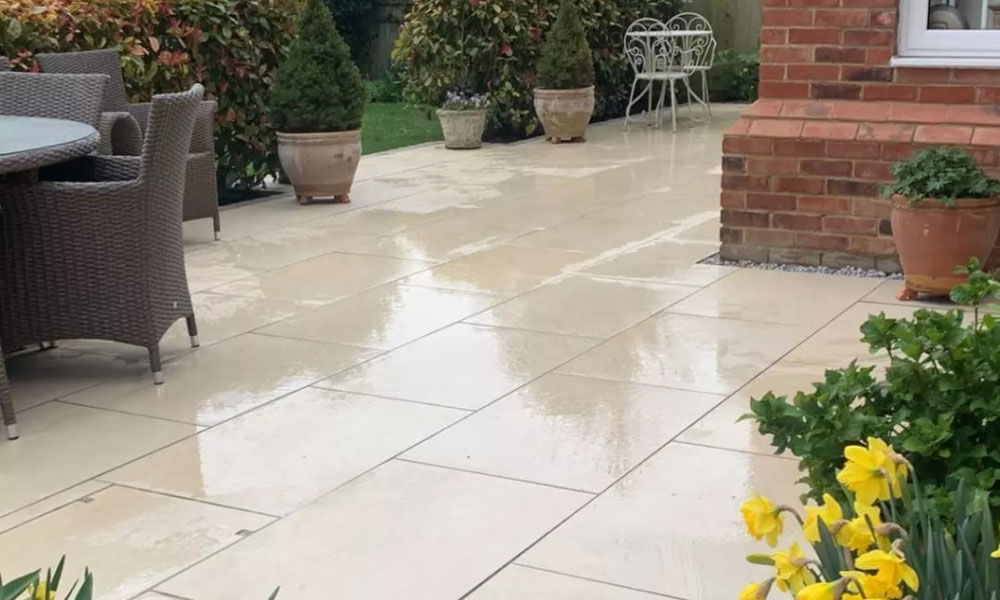
Porcelain paving carries a higher upfront cost than manufactured concrete, but is worth the long-term investment. It is extremely durable, resistant to frost and staining, and requires very little maintenance beyond occasional cleaning. Because it is so easy to keep looking good, porcelain can actually represent excellent value over the lifetime of the patio, particularly for homeowners who want a low-maintenance finish.
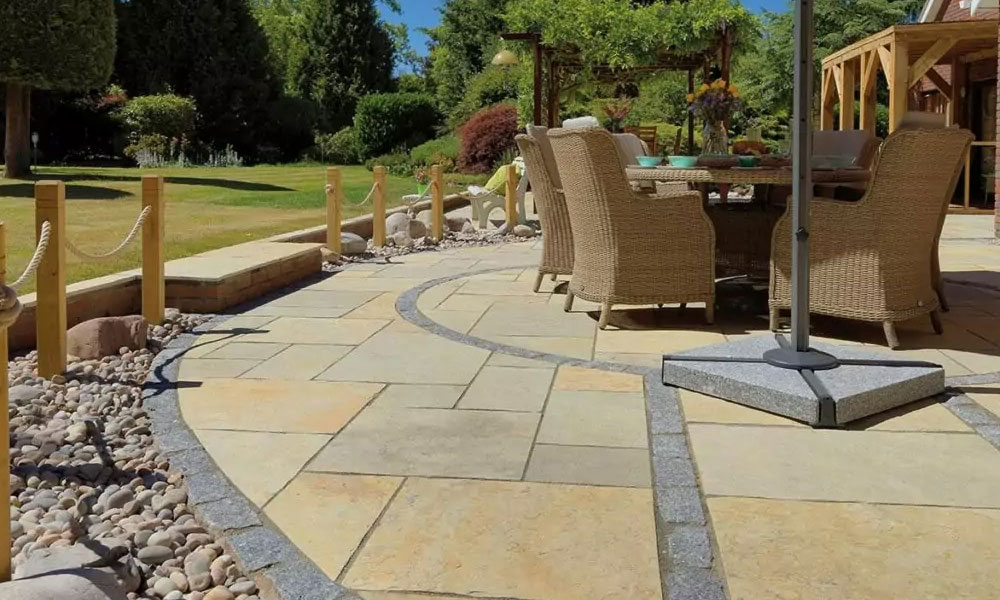
Natural stone paving covers materials including limestone, granite, and sandstone. Natural stone gives a garden a timeless, organic appearance and is available across a range of price points. However, it does require periodic sealing and cleaning to keep it looking its best.

Slate paving has a distinctive dark, fine-grained appearance that works particularly well in contemporary or minimalist garden designs. It is hard-wearing and naturally slip-resistant, making it suitable for paths and patios alike. Its darker tones can make a small garden feel more intimate, so it is best used where that effect is intentional.

Stepping stone paths are a smart, cost-effective way to create defined routes through a small garden without the expense or visual weight of a fully paved pathway. Because they use fewer slabs than a continuous path, the material costs are lower and installation is simpler.
They also create visual interest in the garden, breaking up planting or lawn areas with a clear sense of structure and movement. For narrow gardens in particular, stepping stones guide the eye along the space without making it feel cluttered or over-paved.
Not sure which is right for your garden? Contact our team and we would be happy to advise on what would suit your space best.
Several design techniques can make a small garden feel more spacious. One of the most effective ideas is vertical planting, which we covered in an earlier section. Alongside that, here are some additional tricks.

A cohesive colour scheme can unify a small garden and make it appear more organised and spacious. In a small garden, light paving colours reflect light rather than absorb it, which can make a space feel larger and airier.
As a general rule, you should choose a palette of two or three complementary colours for your plants, pots, and garden accessories. A combination of lighter colours such as whites, pastels, and soft greens, could be combined with pops of brighter colours to make the space feel open, with interest and focal points.
Dark paving can still work well, but it tends to look best where it is used as a deliberate design choice alongside lighter walls or planting rather than across the whole garden.

In a small garden, furniture needs to work harder. Prioritise pieces that serve more than one purpose: benches with built-in storage, stools that double as plant stands, or foldable tables that can be cleared away when not in use.
Where possible, use existing walls or boundaries to anchor built-in seating. This frees up floor space, removes the need for freestanding chairs, and gives the garden a more considered, designed feel.
For dining, folding or stackable tables and chairs are the most practical solution for smaller patios. They perform well when needed and take up minimal space when stored.
The design of your garden floor can significantly influence how spacious it feels. Diagonal or herringbone laying patterns draw the eye across the width of the garden, creating a sense of movement and depth.
Paving layout choices are also important. A rectangular patio laid with joints running parallel to the longest dimension of the garden will emphasise length, whereas a diagonal layout adds visual interest. Using different materials or textures to define distinct zones within the garden, such as a dining area and a planting border, can also create a sense of purpose and structure without the need for physical barriers.
In most cases, paving your garden will not require planning permission. But, it may be required if you are installing an impermeable surface larger than 5 square metres, which could lead to rainwater draining onto a public road or pavement. Using permeable paving, drainage channels, or directing surface water to a planted area or soakaway within your own property can help you meet current regulations. If you are in any doubt, it is always worth checking with your local planning authority before you start work.

A well-chosen planting scheme can keep a small garden looking good across every season. The key is selecting varieties that earn their space for more than a few weeks, rather than peaking briefly and fading.
For low-maintenance colour, perennials such as Coreopsis are a reliable choice. They return year after year with minimal intervention and provide sustained interest through the warmer months. Pair these with evergreens such as Skimmia and Pittosporum, which maintain structure and colour through winter when other plants have died back.
If space allows, a compact greenhouse tucked into a corner is worth considering. It extends the growing season, gives you room to propagate, and adds a practical element to even a very small plot.

Planting is one of the most attractive ways to create privacy in a small garden without the garden feeling enclosed or overlooked. Trellises with climbing plants like ivy or clematis create a natural screen, plant tall shrubs tactically, or you could even install a small pergola to create a shaded, private retreat.
A small garden is no barrier to growing your own produce. Many fruit and vegetables are well-suited to compact spaces and can be grown in containers, raised beds, or vertical growing systems, making them accessible even where ground space is very limited.
Growing fruit and vegetables is a productive use of limited space and can be a rewarding activity for the whole family, helping children in particular to connect with where food comes from.
Your choice of paving slabs is crucial for creating a well-designed garden, but knowing where to start can be tricky. At Minster Paving, we pride ourselves on being paving experts, so get in touch with us so we can discuss your design ideas and how we can help with them.
The cost of a small garden depends on its size, materials and level of landscaping. A simple refresh with plants and decorative gravel may cost a few hundred pounds, while a complete redesign with paving, planting and lighting can cost several thousand pounds. Choosing cost-effective materials such as manufactured paving or Indian sandstone can help keep costs down while still achieving a high-quality finish.
The best layout for a small garden is usually simple and uncluttered. Rectangular patios, clearly defined planting borders and designated seating areas help create a sense of order and maximise usable space. Long, narrow gardens can benefit from zoning, while square gardens often feel larger with diagonal paving patterns or curved pathways. The ideal layout will depend on how you plan to use your garden.
The best paving for a small garden depends on your budget, style and maintenance preferences. Porcelain paving is popular because it is durable, easy to clean and resistant to algae growth. Natural stone paving offers a timeless appearance with unique colour variations, while manufactured paving provides an affordable and versatile option. Light-coloured paving can also help make a small garden feel brighter and more spacious.
Designing a small garden on a budget starts with careful planning and prioritising essential features. Reusing existing materials, painting fences and choosing younger plants can help reduce costs. Gravel and stepping stone pathways are often more affordable than large paved areas. Selecting cost-effective paving materials and completing landscaping in stages can also help spread the cost while achieving a professional-looking result.
The best plants for a small UK garden are those that provide long-lasting colour and structure without taking up too much space. Popular choices include lavender, hardy geraniums, salvia and erigeron for flowers, alongside evergreen plants such as skimmia and pittosporum. Climbers like clematis and star jasmine are ideal for adding height and interest while making the most of vertical space.
In many cases, you do not need planning permission to pave your garden. However, permission may be required if you are installing an impermeable surface larger than 5 square metres and rainwater will drain onto a public road or pavement. Using permeable paving, drainage channels or other sustainable drainage solutions can help meet regulations. Always check with your local authority if you are unsure.
To make a small garden look bigger, use light-coloured paving, keep planting schemes simple and avoid overcrowding the space with furniture. Vertical planting, mirrors and carefully positioned focal points can create the illusion of depth. Laying paving diagonally or using larger paving slabs can also make the garden feel more spacious by drawing the eye across the entire area.
Yes, porcelain paving is often worth the investment for a small garden. It is highly durable, easy to maintain and resistant to stains, frost and algae growth. Its smooth, contemporary appearance can help create a clean and spacious look, while its low maintenance requirements make it ideal for busy homeowners. Although it typically costs more upfront than some alternatives, its longevity can provide excellent long-term value.
Cutting paving slabs is a straightforward job when you have the right tools and know what you’re doing. By following this comprehensive guide by Minster

How Much Fall Should a Patio Have? This is the question that many people ask when they begin to build their first patio. We’ve created

Minster Paving Ltd
Unit 4a
Standlake Business Park
Oxfordshire
OX29 7PL
/// system.think.unfilled
Get in Touch
Tel: 01865 300252
Email: info@minsterpaving.co.uk
Monday * – Friday:
7:00am – 5.00pm
Saturday:
7:00am – 1.00pm
Sunday:
CLOSED
Get in Touch
Minster Paving Ltd
Unit 4a
Standlake Business Park
Oxfordshire
OX29 7PL


© 2026 – Minster Paving