Sandstone paving is a durable and attractive choice for patios, driveways, and garden paths, offering natural beauty and long-lasting performance. However, without regular maintenance, it can accumulate dirt, algae, and moss, becoming slippery and potentially hazardous underfoot.
Fortunately, keeping your sandstone paving clean doesn’t have to be difficult, and it doesn’t need to come with a risk of damage, either. In this article, we’ll explore the most effective methods to safely and thoroughly clean Indian sandstone slabs, helping you restore their original appearance and reduce the risk of slips and falls!
Contents
- Stiff-bristle broom or brush
- Safety gear (such as gloves and goggles)
- Warm water
- Bucket
- Watering can
- Garden hose.
- Pressure washer (method 1)
- Paving cleaner (method 2)
- Mild detergent (method 3)
How to Clean Sandstone Paving With a Pressure Washer
When used correctly, a pressure washer can speed up the process of cleaning sandstone. However, there’s an emphasis placed on “when used correctly” – negligence can easily damage your paving stones! Here’s how to safely use a pressure washer to clean your paving:
1. Preparing the Paving Surface
- Repair any obvious damage and re-point joints where necessary, so water doesn’t wash away sand or jointing material.
- Remove any furniture from your patio to give yourself a clear working space.
- Sweep or leaf-blow leaves, loose dirt, and moss to expose the surface as much as possible.
2. Pressure-Washing Your Paving
- Keep your washer under 1,500 psi. Higher pressures risk damaging the stone’s surface.
- We strongly recommend testing a small area first to ensure the pressure washer doesn’t cause damage to your sandstone paving.
- Use a wide-angle fan nozzle rather than a pinpoint jet – this spreads the force over a larger area. Keep the nozzle 30 to 40 cm from the stone.
- Start at one corner and move in overlapping horizontal sweeps, working downhill so dirty water flows over unwashed areas.
3. Rinsing & Allowing the Surface to Dry
- If foam or discoloured water remains, give the paving surface another light wash.
- Do not walk on the paving until fully dry, usually around 24 hours.
- If your sandstone was sealed, you should reapply a breathable natural stone sealer once completely dry to protect against staining and moss regrowth.
How to Clean Sandstone Paving Using a Paving Cleaner Solution
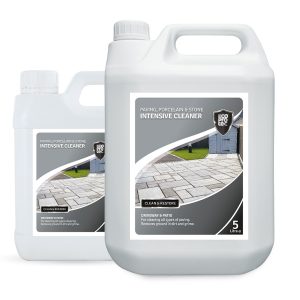
One popular method for pristine-looking sandstone paving is to use a cleaning solution designed for patios, pathways, and driveways. We recommend a sandstone-safe cleaning product like ECOPROTEC Intensive Cleaner to get the job done. Here are the steps to follow:
1. Preparing the Paving Surface
- Fix any visible damage on each slab and re-point joints as needed to prevent water from eroding the jointing material.
- Clear your patio of all garden furniture to create a clear work area.
- Use a broom or leaf blower to remove leaves, loose dirt, and moss, exposing as much of the surface as possible.
2. Applying the Solution & Agitating the Surface
- Dilute your paving cleaner per manufacturer’s instructions (typically around 1:10 parts warm water, but check the bottle).
- Test the solution on a small area first. Then, working in small sections, spread the solution evenly using a scrubbing brush or a light-pressure sprayer.
- After 5 to 10 minutes (don’t let the cleaner dry), use a stiff-bristled brush or a broom to agitate the surface in circular motions.
3. Rinsing & Allowing the Surface to Dry
- Using a garden hose, wash away all residue. Ensure no foam or cloudiness remains, as this indicates leftover detergent.
- Allow the paving to air‑dry completely (about 24 hours).
- If your patio is sealed, reapply a breathable sealant once dry to reduce the risk of future staining and algae growth.
How to Clean Sandstone Paving Using Soapy Water
If you don’t have any paving cleaning solution to hand and are working on a tight budget, you can use soapy water to clean your paving. Not only is this a convenient option, but it is also one of the safest and most effective methods. Here’s how you should do it:
1. Preparing the Paving Surface
- Remove loose dirt, leaves, and debris from the paving surface using a stiff broom or a leaf blower, if you have one.
- Move all your garden furniture from the work area to give you a clear space.
- Lightly hose down the paving to loosen surface grime before the proper cleaning begins.
2. Scrubbing the Paving
- Mix a bucket of warm water with mild dish soap. Avoid overly acidic solutions. Diluted household bleach can be used as an alternative, but use this with caution.
- Test the solution on a small area first to determine if it’s effective. Next, use a mop, watering can, or soft spray to spread the mixture across the paving.
- Work the solution into the stone using a firm bristle brush, focusing on stained or mossy areas.
3. Rinsing & Allowing the Surface to Dry
- Hose down the entire surface to remove soap and loosened dirt. For stubborn patches, reapply soapy water and scrub again.
- Allow the paving to air dry before walking on it or replacing garden furniture or pots. This should take around 24 hours.
- Inspect all joints between slabs to ensure they’ve not been dislodged. This method is gentle, so there’s a relatively low risk of this happening!
How to Remove Rust Stains From Sandstone
Rust can turn your paving into a bit of an eyesore, and it can be particularly troublesome to remove. Following these steps, you can help your paving become rust-free!
- Gather Ingredients: You’ll need lemon juice and table salt.
- Mix Paste: Combine the salt with lemon juice until thick and spreadable.
- Apply Paste: Cover rust patches generously, pressing into the paving.
- Wait: Let the paste sit for 15 to 20 minutes, keeping it damp if needed.
- Scrub Gently: Use a soft or medium-bristle brush in circular motions.
- Rinse: Wash away residue and loosened rust with clean water.
- Dry & Seal: Let the paving air‑dry fully, then reapply a sealant if your paving is sealed.
This method is effective for most surface-level rust stains on sandstone paving. However, for the most stubborn rust marks, you should opt for a commercial rust remover that’s been specifically designed for natural stone paving.
For future rust stains, aim to clean these up as soon as possible to prevent them from being more problematic to remove!
How Do You Ensure the Longevity of Your Sandstone Paving?

Indian sandstone is a particularly long-lasting solution for patios, pathways, and driveways, as long as it is properly looked after. To ensure its longevity, here are some maintenance tips to keep in mind:
- Remove leaves, dirt, and other debris weekly to prevent staining and moss growth.
- Give the surface a gentle hose-down every month to wash away loose contaminants.
- Choose pH‑neutral soaps or specialist sandstone cleaners over pressure washing.
- Apply a breathable stone sealer every 1-2 years (or as specified) to repel water, oil, etc.
- Treat spills, algae, moss or rust at the first sign to stop them from penetrating the stone.
- Repoint the joints between slabs when they wash out to keep your paving stable.
- Avoid dragging metal‑edged furniture or dropping heavy objects directly on the paving.
- Fit rubber or plastic feet to chairs, tables and plant pots to reduce scratching.
- Choose long-lasting Indian sandstone paving from suppliers such as Minster Paving.
How Often Should You Clean Sandstone Paving?
You should give your patio a thorough surface-level clean with soapy water around twice a year, as this helps lift light moss, algae, and general grime before it becomes tougher to remove. For a deep clean using natural stone cleaners, you should plan on doing this once a year to tackle more stubborn dirt.
However, you should clean sooner if you notice…
- Green or Black Streaks: Algae, moss or mildew patches.
- Orange or Brown Spots: Rust or iron stains.
- Slippery Feel: Surface becomes slick underfoot.
- Stubborn Stains: Oil drips, tannin marks from plant pots, or bird droppings.
What Are the Best Natural Stone Paving Cleaning Solutions?
At Minster Paving, we recommend the following cleaning solutions for Indian sandstone paving:
Shop Our Sandstone Paving Range Today!
If you’re looking for a sandstone patio that stands the test of time, you’re in the right place. At Minster Paving, we stock a range of stunning Indian sandstone suitable for gardens of all shapes, sizes, and styles. If you’d like to see our products in person before you buy, please visit our Oxfordshire-based store!